Automatic faucet and flush valve repair can help restore steady water flow and reliable flushing. Start with safe checks, such as wiping the sensor lens and making sure the water supply is open. Leave internal parts, leaks, and electrical faults to a qualified plumber. A simple check is enough for some problems, but not every fault.
Busy restrooms need faucets and flush valves that work each time. Even a small fault can waste water, interrupt service, and upset visitors. In Hillsboro, knowing what to check—and when to stop—can help protect people and plumbing. Hillsboro Plumber can help property owners understand a fault and plan the right next step.
Table of Contents
- How do automatic faucets and flush valves work?
- What are the most common problems with automatic faucets and flush valves?
- What should you check before calling for a repair?
- How are automatic faucets and flush valves diagnosed and repaired?
- When should a commercial automatic faucet or flush valve be replaced?
- How can businesses prevent repeat problems and downtime?
- What should you expect from professional commercial restroom plumbing service?
How do automatic faucets and flush valves work?
An automatic faucet uses a sensor to notice hands near the sink. The sensor tells a valve to let water flow, then tells it to stop when hands move away. Many models use batteries or connect to building power. The exact setup can vary by faucet.
How sensor faucets detect users and control water flow
The sensor lens is the small window that sends and receives a signal. When it detects a hand, the control unit opens a solenoid valve. A solenoid valve is an electric part that starts or stops water flow. Some faucets also have a control for water temperature or flow.
A dirty lens, weak battery, or stuck valve can stop a faucet from working well. Dirt and water spots may confuse the sensor. The faucet may also fail if its water supply is off or its filter is blocked. A filter catches small bits before they reach the valve.
How commercial flush valves release water
A flush valve sends water from a supply line into a toilet or urinal. In an automatic model, a sensor detects use and tells the valve to flush. Some models use batteries, while others connect to building power. The valve must fit both the fixture and water supply.
A flush valve is not the same as a tank toilet’s flapper. A flush valve controls water at the supply line. A flapper lets water out of a toilet tank. Knowing which kind is installed can help narrow down the fault. It also helps a plumber choose the right parts.
What are the most common problems with automatic faucets and flush valves?
Common problems include no water, water that will not stop, low flow, false starts, and toilets that do not flush. The cause may be a power issue, dirty sensor, blocked filter, worn seal, or failed valve. A symptom alone does not show which part needs repair.
Faucets that do not turn on, shut off, or maintain steady flow
If a faucet will not turn on, check whether its sensor lens is dirty and whether the water supply is open. If it keeps running, the sensor may be blocked or the valve may not close. Weak or uneven flow can point to a clogged screen, filter, or supply problem.
A faucet that starts and stops by itself may be reacting to reflections or movement nearby. A loose power connection or failing solenoid can also cause odd behavior. Keep the sink area clear while watching the faucet. Do not put fingers or tools inside the valve housing.
Flush valves that keep running, fail to flush, or leak
A toilet that keeps running may have a valve that does not close fully. A flush valve repair kit may include seals, but the right kit depends on the fixture model. Parts that do not fit can leave the problem in place or cause a leak.
A flush valve that will not flush may have a power, sensor, supply, or internal valve problem. Do not ignore water leaking around a toilet or valve. Shut off the local supply if it is safe and easy to reach, then arrange help. Toilet Repair can help with related faults, including a toilet that keeps running.
What should you check before calling for a repair?
A few safe checks may solve a simple problem without a professional. Wipe the sensor lens, look for a power light, and make sure the water supply valve is open. Stop if water leaks, wires look damaged, or the fixture needs to be opened.
Safe checks for batteries, power, sensor lenses, and water supply
Try these basic checks before arranging service:
- Wipe the sensor lens gently with a soft, damp cloth, then dry it.
- Check the battery area or visible power light, if the model has one.
- Move items away from the sink or toilet sensor.
- Look for a closed supply valve or a bent, visible supply line.
- Note when the fault happens and whether other fixtures have the same problem.
These checks do not mean taking the fixture apart. A business owner or staff member can usually clean an exposed sensor lens and note what happens. Do not use strong cleaners on the sensor or force a valve handle. Follow the maker’s care guide when one is available.
Why repeated resets or disassembly can make a problem worse
A reset may clear a short-term fault, but doing it again and again can hide a problem that needs repair. Opening a powered fixture or valve can lead to electric shock or water damage. Small inner parts can also break or go back in the wrong order.
Stop using the fixture if there is a strong leak, open wiring, or water near an electrical connection. Keep people away from the area. Shut off the supply only if the valve is easy to reach and safe to use. A plumber can check the cause instead of guessing.
How are automatic faucets and flush valves diagnosed and repaired?
A plumber first matches the symptoms to the fixture type and model. They check power, sensor response, water supply, and visible leaks before testing inner parts. The aim is to find the cause, not just replace the first part that looks worn.
Inspecting sensors, solenoids, filters, cartridges, and connections
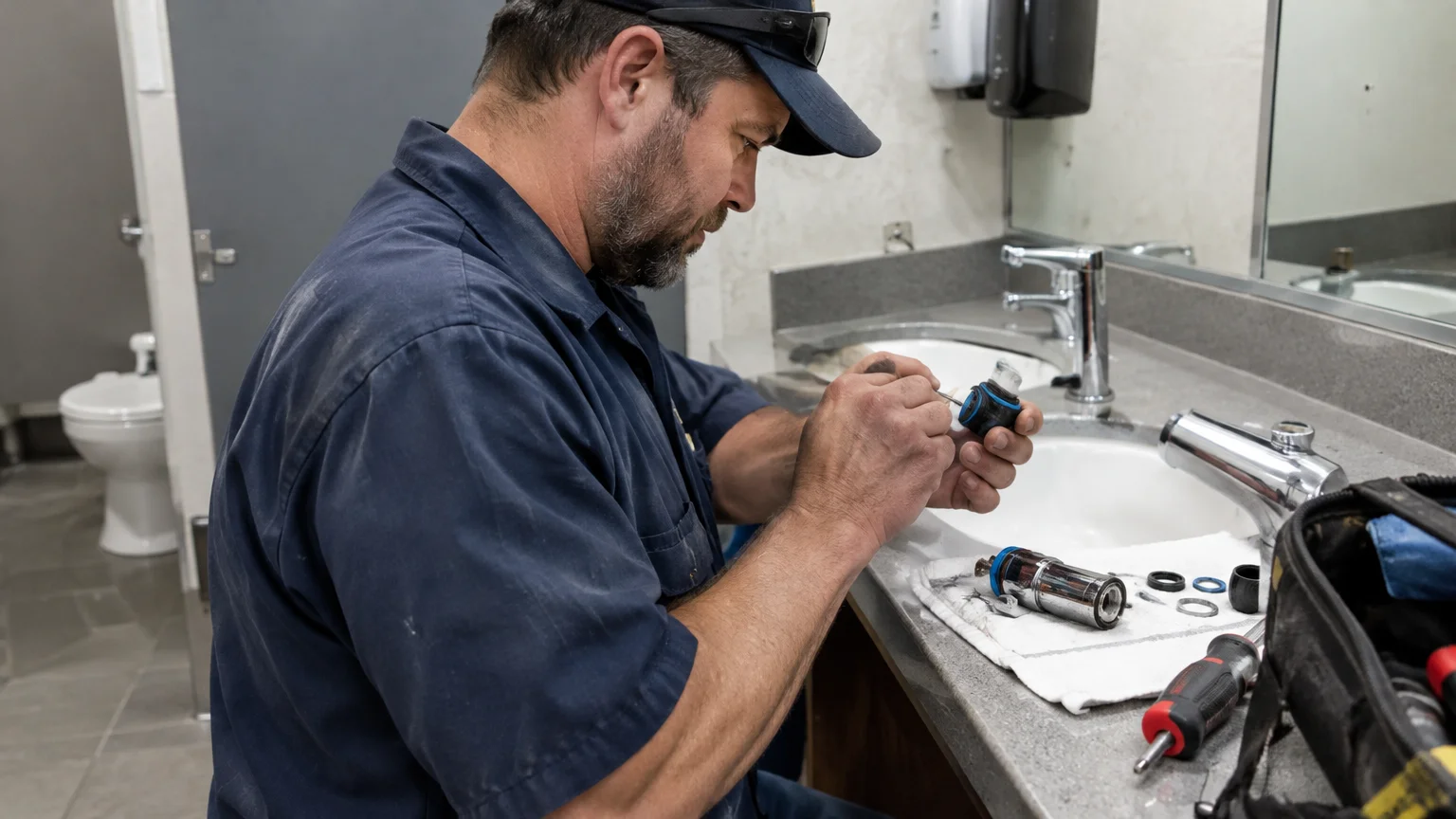
A service check may include the sensor, solenoid valve, filter, cartridge, and supply connections. A cartridge is an inner part that controls water flow in some faucets. The plumber may clean or replace a blocked filter, fix a loose connection, or use a part made for that fixture.
For toilet repair, the plumber checks whether the flush valve closes fully and whether seals or other parts are worn. A tank toilet may need different parts from a commercial flushometer. A flushometer is a valve that connects to a water supply line instead of a toilet tank.
Testing operation and checking for leaks after repair
After the repair, the plumber runs the fixture as it is normally used. They check that the faucet starts and stops as expected and that the flush valve releases and closes. They also look for leaks at supply connections and around the fixture.
Testing matters because a fixture may seem fixed but still waste water or fail during regular use. Staff should report if the fault returns. For a Moen sink faucet repair, the model and part details help guide the work. The same idea applies to other brands and commercial fixtures.
When should a commercial automatic faucet or flush valve be replaced?
Repair may make sense when the fixture is in good shape and the needed part is available. Replacement may be a better choice when faults keep returning, parts are hard to find, or the fixture no longer suits the restroom. A plumber can review the condition, use, and fit before work begins.
Repair considerations: part availability, recurring faults, and fixture condition
One worn seal or sensor may be a simple repair. But repeat failures can point to deeper wear, poor fit, or heavy use. Rust, cracks, and damaged connections can also make a repair less reliable.
The right toilet flush valve repair kit must match the valve model. A kit that looks alike may have seals or sizes that do not fit. If the model label is gone, a plumber can inspect the fixture and find the right parts. Do not choose a kit by looks alone.
Replacement considerations: compatibility, accessibility, and water efficiency
A new faucet or valve must fit the sink or toilet and connect to the water supply. It must also work with the power source that is available. In a public restroom, controls should be easy for people with different needs to use. A plumber can check space, access, and the fixture’s purpose.
Water-saving fixtures may help limit waste when chosen and installed well. The best choice depends on the building and its existing pipes. Do not replace a fixture before checking why it failed. A supply problem or wrong setting could affect a new unit, too.
How can businesses prevent repeat problems and downtime?
Regular care helps staff find small faults before they disrupt a restroom. Clean sensors as the maker advises, check for drips, and report changes in flow or flushing. A useful care plan should match how often the restroom is used.
Routine cleaning and inspection for high-use restrooms
Use gentle cleaning methods that do not scratch sensor lenses or harm seals. Do not let cleaning products pool around faucet or flush valve bases. During regular checks, look for slow drips, unexpected running, weak flow, and slow sensor response.
Staff can report a fault without opening the fixture. A short note about the location, symptoms, and time can help a plumber find the cause. If a toilet keeps running, mark it for prompt attention. This can help limit water waste and restroom disruption.
Planning maintenance around occupancy and fixture demand
Plan checks around restroom use and building needs. A busy site may need more visual checks than a small office. Keep notes about repairs, model details, and repeat faults so future service can be planned with care.
In Hillsboro, property managers can ask Hillsboro Plumber about care plans for commercial restrooms. If several fixtures have the same fault, note whether they share a water line or power source. This detail can help show whether the problem is with one fixture or part of the building system.
What should you expect from professional commercial restroom plumbing service?
A clear service visit starts with fixture details and a simple account of the problem. The plumber should check the system, explain repair choices, and test the fixture afterward. The business should know what was repaired and whether any follow-up is needed.
Preparing fixture details and describing symptoms clearly
Before service, note where the fixture is, what type it is, and its brand and model if visible. Describe what happens, when it began, and whether the fault is steady or comes and goes. Mention leaks, power lights, odd sounds, or other fixtures affected.
Do not remove covers just to find a model label. A photo of the fixture’s outside may help if it is safe to take. Keep the area clear for the plumber. Let staff know if the fixture should not be used until it is checked.
Confirming the repair, testing performance, and documenting follow-up needs
After the work, ask which part caused the problem and what was done. Check that the faucet or flush valve was tested and that visible connections are dry. Write down any care tips or signs that staff should watch for.
Keep repair notes with the fixture’s model details when possible. This can help if the same problem returns or another fixture needs service. Good records can also help property owners plan plumbing repair and pipe repair work before small issues affect more of the building.
Key takeaways
- Automatic fixtures need working sensors, power, valves, and water supply.
- Cleaning an exposed sensor lens is a safe first step.
- A toilet flush valve repair kit must fit the installed valve.
- Stop and seek help for leaks, damaged wires, or repeat faults.
- Testing after repair helps check that the fixture works and stays dry.
Frequently Asked Questions
How do you fix a toilet that keeps running?
A running toilet may have a flush valve that will not close, a worn seal, or a sensor fault. Check for an easy-to-see blockage and note whether the toilet has a tank or a direct-supply valve. Do not open a commercial valve. A plumber can find the cause and fit parts that match.
Can a homeowner clean an automatic faucet sensor?
Yes. A homeowner or staff member can gently wipe the exposed sensor lens with a soft, damp cloth, then dry it. Keep strong cleaners and tools away from the lens. If the faucet still fails or water leaks, stop and have a plumber check it.
What causes low water pressure in a house?
Low water pressure may come from a partly closed valve, a blocked faucet screen, a supply issue, or a leak. Check whether the problem affects one faucet or several. If pressure drops across the home or a leak is visible, a plumber can check the supply and fixtures safely.
What should you do if a water heater is leaking from the bottom?
Keep people away from standing water near electrical parts. If it is safe, shut off the water supply to the heater and stop using it. A leak near the bottom can have more than one cause, so arrange a professional check. Water Heater Repair can help assess the unit.
How do you check for gas leaks?
Do not use a flame or turn switches on or off if you suspect a gas leak. Leave the area and contact the gas utility or emergency services from a safe place. A qualified professional can check gas pipes. Gas Line Plumbing handles gas line work; do not try to find a leak yourself.
Conclusion
Automatic faucet and flush valve problems may come from dirt or worn inner parts. Safe checks can help with small faults, but leaks, electrical issues, and repeat problems need professional care. Hillsboro Plumber can help property owners assess restroom plumbing and plan a suitable repair. Contact us to arrange help with a faulty faucet or flush valve.