The water leak repair cost for a commercial property depends on the leak’s location, size, access, damage, and urgency. A visible fitting leak may need a simple fix, while a hidden pipe leak can require testing, surface access, drying, and added repair work. A written quote confirms the final scope and cost.
Commercial leaks can stop work, harm stock, and create safety risks. Fast action helps limit water spread and protects the building. Hillsboro Plumber helps property owners review leak concerns and choose a suitable repair plan.
Table of Contents
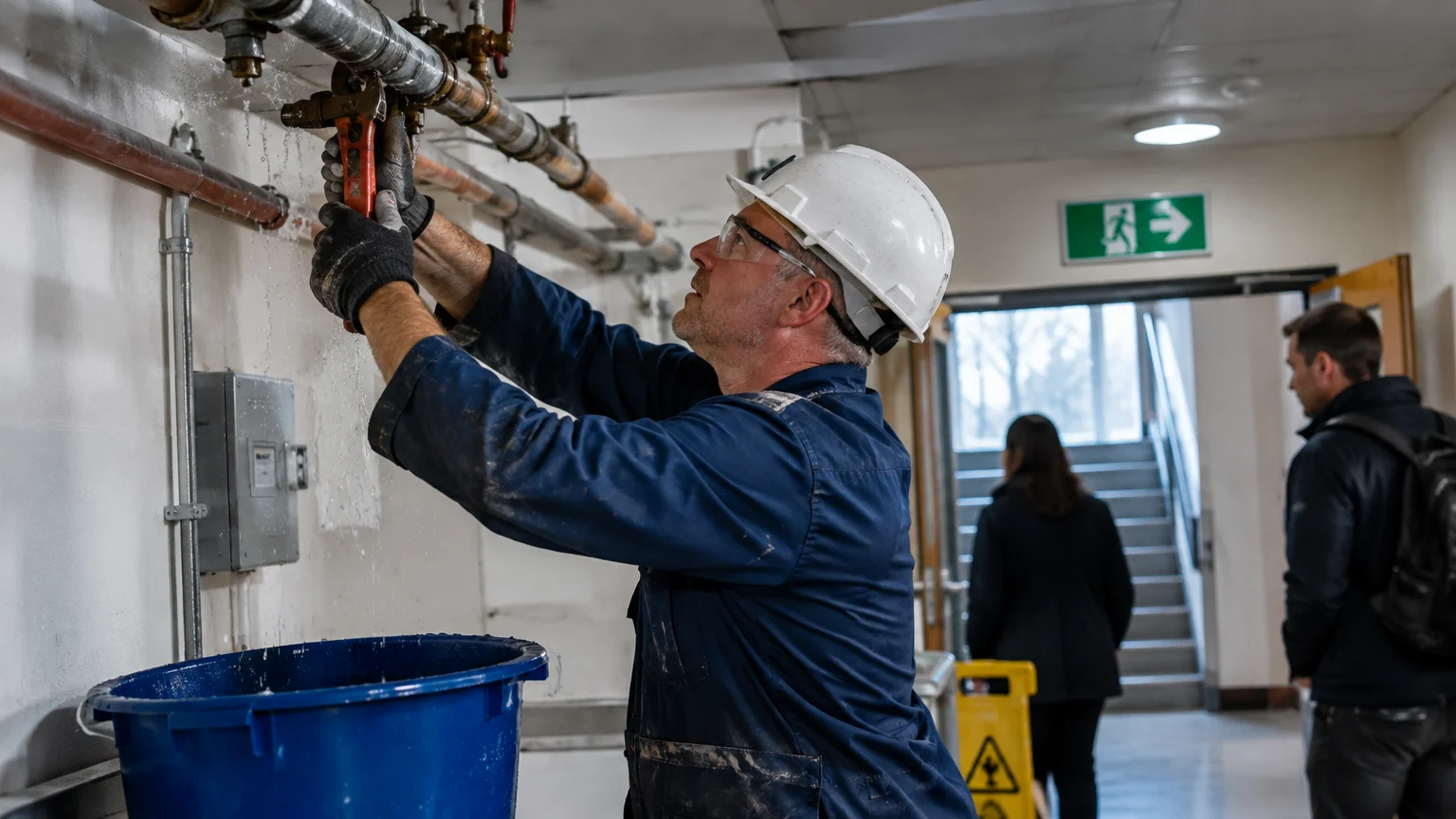
- How much does commercial water leak repair cost?
- What types of commercial water leaks need professional repair?
- How does leak location affect commercial repair costs?
- What does a commercial water leak inspection include?
- When is emergency commercial leak repair necessary?
- Should a commercial water leak be repaired or replaced?
- How can businesses compare commercial leak repair quotes?
- Frequently Asked Questions
- Key Takeaways
- Conclusion
How much does commercial water leak repair cost?
Commercial water leak repair cost changes from one building to another. The final amount depends on pipe material, leak size, access, water damage, labor, and urgency. A small exposed connection is often simpler than a leak under a slab or inside a finished wall.
Ask for a written quote after the plumber checks the property. The quote should explain the likely cause, repair method, parts, access work, cleanup, and tests. The final cost is confirmed on that quote, rather than guessed from a general figure.
What factors have the greatest effect on the final cost?
Access is often a main cost factor. A pipe above an open ceiling may be easy to reach. A pipe behind tile, drywall, flooring, equipment, or stored goods may need careful removal and repair. Pipe size and material also affect the work.
Urgency matters because an active leak can keep causing damage. Water may reach electrical equipment, stock, tenant areas, or customer spaces. A plumber may need to isolate part of the building, protect nearby property, and test the system after repairs.
How does leak repair compare with related commercial plumbing work?
A leak repair may be smaller than full pipe replacement, but the cause matters. Drain cleaning clears blocked waste lines, while leak repair stops water escaping from a supply or drain system. Water heater repair, toilet repair cost, fixture repair, and pipe replacement each need different parts and skills.
A leak that causes mold, damaged drywall, or weak flooring may need other trades. Those services are separate from the plumbing repair. Hillsboro Plumber can help Hillsboro property owners understand which work belongs in the plumbing quote and which work may need another contractor.
What types of commercial water leaks need professional repair?
Professional repair is needed when water keeps escaping, the source is unclear, or the leak affects a building system. Businesses should not ignore wet ceilings, rising water use, damp walls, low pressure, or repeated plumbing trouble. These signs may point to a hidden leak.
Some simple checks are safe for an owner or manager. Staff can close a local shutoff valve, move stock away from water, and inspect exposed connections. They should not open walls, cut floors, repair pressurized lines, or work near electrical equipment without proper training.
How do visible leaks differ from hidden leaks?
Visible leaks are easier to find because water appears at a pipe, valve, faucet, toilet, or appliance connection. The source may still be higher or farther away than the wet spot. Water can travel along framing, ceilings, and floors before it becomes visible.
Hidden leaks may cause stains, peeling paint, soft floors, musty smells, or unexplained moisture. A commercial plumber may use pressure checks, moisture tools, acoustic listening, thermal tools, or a camera. The best method depends on the building and its plumbing system.
Which plumbing systems commonly develop leaks in commercial properties?
Commercial leaks can occur in supply pipes, drain lines, fixtures, water heaters, boiler connections, irrigation systems, and fire protection equipment. Older pipes may corrode or weaken. New systems can also leak because of poor joints, movement, damage, or failed seals.
Kitchen areas, restrooms, mechanical rooms, tenant spaces, and roof equipment need close review. Gas lines are a separate safety concern. A suspected gas leak requires people to leave the area and follow local emergency guidance instead of testing the line themselves.
How does leak location affect commercial repair costs?
Leak location changes the work because it affects access, testing, safety, and restoration. A leak in an open mechanical room may be found and reached quickly. A leak under concrete, inside a wall, or beneath a finished floor needs more planning and may interrupt business.
The plumber should explain where the leak is believed to be and how certain that finding is. A careful plan can help limit needless wall or floor openings. It can also show whether the building needs a temporary water shutdown or staged repairs.
Why are leaks behind walls, ceilings, or floors more complex?
Hidden leaks often need a search before repair starts. The plumber may trace moisture, test pipe sections, and inspect nearby rooms. Access openings should be placed with care, but the exact opening may not be clear until testing is complete.
Finished surfaces can add work after the plumbing repair. Drywall, tile, flooring, insulation, and ceiling panels may need repair by qualified trades. Ask whether the plumbing quote covers only access and plumbing work or lists restoration separately.
How do underground and slab leaks change the scope of work?
An underground leak may affect soil, landscaping, parking areas, or utility paths. A slab leak is beneath a concrete foundation or floor. Finding the exact line can be hard, and repairs may involve rerouting, breaking concrete, or using a less disruptive method.
Commercial properties may need controls for traffic, tenants, equipment, and work hours. The plumber should explain expected disruption before work begins. A clear scope helps owners plan shutdowns and protect staff, customers, and valuable property.
What does a commercial water leak inspection include?
A commercial leak inspection starts with questions about symptoms, timing, affected areas, past repairs, and recent changes. The plumber checks visible pipes, valves, fixtures, pressure, and nearby damage. The goal is to find both the source and the reason for the leak.
The owner or manager should provide access to mechanical rooms, tenant areas, ceiling spaces, shutoff valves, and maintenance records. Better access helps the plumber test more of the system. It can also prevent delays when an active leak needs quick isolation.
How do plumbers find leaks that are not visible?
Plumbers may use pressure testing to find a loss in a closed section. They may listen for escaping water, check moisture patterns, use thermal tools, or inspect drain lines with a camera. No single method works for every building or pipe type.
The plumber should explain what each test can prove and what it cannot prove. A moisture reading can show a wet area but may not identify the pipe. A camera can show problems inside some drain lines, but it does not inspect every pressurized supply pipe.
What information should a leak inspection report document?
A useful report should name the suspected source, affected system, damage, testing method, and repair options. It should say whether the leak is active, isolated, or still under review. Photos can show conditions before work begins.
The report should also list limits on the inspection. Concealed spaces may not be opened during the first visit. Owners should receive notes about access, shutdowns, safety concerns, follow-up tests, and work outside the plumbing scope.
When is emergency commercial leak repair necessary?
Emergency repair is needed when water is spreading, a major line fails, the building cannot operate safely, or the leak threatens people, equipment, stock, or nearby spaces. A burst pipe, fast ceiling leak, or failed main line should not wait for routine scheduling.
A slow drip may still need prompt care. Small leaks can harm framing, flooring, insulation, and stored goods over time. A property manager should document the condition, protect the area, and arrange professional help before damage grows.
Which signs indicate that a leak cannot wait?
The following signs suggest urgent action:
- Water is flowing from a broken pipe, ceiling, wall, or floor.
- A shutoff valve will not stop the water.
- Electrical equipment or wiring may be wet.
- The leak affects a public area, work area, or occupied tenant space.
- Floors, ceilings, walls, or structural materials are becoming soft.
- Water pressure suddenly drops across part or all of the building.
People should stay away from unsafe areas and follow the building’s emergency plan. If water reaches electrical systems, staff should not enter until the area is declared safe.
What should property owners do before the plumber arrives?
The owner should close the nearest safe shutoff valve if its location is known. Staff can move portable items away from water, place safe containers under minor drips, and record photos or video. They should never climb into unsafe ceiling spaces or handle damaged electrical equipment.
The owner should note when the problem began and whether water use changed. Access doors, keys, tenant notices, and maintenance records should be ready. These steps help the plumber work faster without asking untrained staff to make repairs.
Should a commercial water leak be repaired or replaced?
The right choice depends on pipe condition, leak cause, location, age, material, and repair history. Targeted repair may suit a sound pipe with one damaged joint. Replacement may make more sense when the section has broad corrosion, repeated failures, or poor access.
A professional should explain both options when both are reasonable. The least disruptive option is not always the best long-term choice. Owners should compare the current repair scope with the risk of another failure in the same area.
When is targeted pipe repair the practical option?
Targeted repair can work when the damaged area is clear and nearby pipe remains sound. It may involve replacing a fitting, seal, valve, or short pipe section. The plumber should test the repaired area and check nearby connections before returning the system to normal use.
This option may reduce disruption in an active business. It can also fit a planned maintenance window when the problem is controlled. Still, ask why the failure occurred and whether nearby sections show similar wear.
When does replacing a pipe or plumbing section make more sense?
Replacement may be better when the pipe has repeated leaks, heavy corrosion, poor support, or widespread damage. It may also help when the material no longer suits the building’s use. A larger repair can prevent repeated access work and business disruption.
The quote should explain what will be replaced and what will remain. It should list shutdown needs, access work, testing, permits when required, and restoration limits. Local rules may affect commercial plumbing repair, so ask who will handle required approvals.
How can businesses compare commercial leak repair quotes?
Businesses should compare the scope, not only the final amount. A detailed quote shows whether each plumber included the same inspection, access, materials, testing, cleanup, and restoration. The final cost should be confirmed in writing before approved work begins.
A lower quote may leave out important work. A higher quote may include a broader repair that lowers future risk. Owners should ask questions until the differences are clear and should not choose a contractor based only on a short description.
What should a detailed plumbing quote include?
A strong quote should include:
- The suspected cause and exact area of the leak.
- The proposed repair or replacement method.
- Pipe, valve, fitting, seal, and other material details.
- Access, isolation, testing, cleanup, and restoration tasks.
- Expected business disruption and water shutdown needs.
- Items that are excluded or may need another trade.
The quote should explain what happens if hidden damage appears after an area is opened. Written approval should be required before added work begins. This helps the business control the scope and keep records for owners, tenants, or insurers.
Which licensing, insurance, and workmanship questions should businesses ask?
The business should ask whether the plumber is licensed for the work and area. It should also ask for proof of insurance, commercial experience, permits, and inspection handling. Rules can vary by state and local authority, so owners should check official guidance for Hillsboro.
The owner should ask who will do the work, how the system will be tested, and what workmanship coverage applies. Reviews can offer useful background, but clear answers and documents matter more. Hillsboro Plumber serves property owners in the main Hillsboro area, including Downtown Hillsboro, Tanasbourne, Aloha, Cornelius, Forest Grove, North Plains, Beaverton, and nearby Washington County communities.
Frequently Asked Questions
What is the first step when a commercial water pipe leaks?
The first step is to keep people away from unsafe areas and stop the water if safe. Close the nearest shutoff valve, protect movable items, and arrange professional help. Do not cut walls, handle electrical equipment, or repair a pressurized pipe without training.
How can a business find a plumbing leak?
A business can inspect exposed pipes, valves, fixtures, ceilings, walls, and floors for moisture. It should watch for stains, musty smells, pressure changes, or unexplained water use. Hidden leaks may need pressure testing, acoustic tools, moisture checks, thermal tools, or camera inspection.
Does a hidden leak always require wall or floor removal?
No. A plumber may locate some leaks with testing or detection tools before opening a surface. Access may still be needed to confirm the source and finish the repair. The plumber should explain the least disruptive method and likely restoration work.
Is water leak repair more urgent in a commercial building?
It can be, because commercial buildings often have more occupants, equipment, stock, tenant spaces, and connected plumbing. A leak can interrupt work or affect nearby areas. Prompt isolation and inspection can help limit damage, but the response should match the risk.
How should a business choose a commercial plumber?
A business should check licensing, insurance, commercial experience, written scope, testing plans, and workmanship terms. It should compare complete quotes rather than short price statements. Clear communication matters when repairs involve hidden damage, shutdowns, access work, or another trade.
Key Takeaways
- Water leak repair cost depends on location, access, damage, urgency, and pipe condition.
- A visible leak can still come from a hidden source farther along the system.
- Businesses should isolate unsafe leaks and avoid electrical or pressurized pipe work.
- A detailed quote should explain testing, access, materials, restoration, and exclusions.
- Repair may suit one damaged area, while replacement may fit repeated failures.
Conclusion
Commercial water leaks need a careful response. The first goal is to protect people and limit water damage. The next goal is to confirm the source, understand repair choices, and approve a clear written scope.
Hillsboro Plumber can help businesses and property owners review leak concerns and plan suitable plumbing work. Contact us to arrange professional support for a commercial water leak assessment and repair quote.